
Can You Colour Hair Without Bleach? A Realistic Guide

Last Updated: November 12, 2026
Quick Summary
You can colour hair without bleach, but bleach-free colour works within limits set by your starting shade. It can add depth, cover grey and shift tone, yet it cannot turn black hair into platinum blonde. Bleach-free methods usually lift hair one to three levels, not five.
Bleach-free colour can add depth, cover grey and shift tone, but cannot turn black hair platinum blonde.
Most unbleached dark hair sits between levels 2 and 5 on the professional scale.
High-lift dye offers the strongest bleach-free lift at two to four levels.
Colour remover strips old artificial dye but will not lighten natural pigment.
Always do a patch test 48 hours before colouring, even with a familiar product.
Not sure what your hair can do without bleach?
ARQ Hair builds gentle, personalised colour formulas with a patch test first.
Table of Contents
Can You Colour Hair Without Bleach?
Yes, you can colour hair without bleach. But the honest answer is that bleach-free colour works within limits, and those limits depend on your starting shade. Bleach-free colour can add depth, cover grey, and shift tone, but it cannot turn black hair into platinum blonde.
The main bleach-free options are permanent colour, semi-permanent dye, high-lift dye, and temporary colour. Each one lifts and deposits differently. Below, we'll show you exactly what each method can and cannot do, so you can pick the right one for your hair.
How Hair Colour Works on Unbleached Hair
Hair colour works by lifting the natural pigment in your hair and depositing new colour on top. Bleach lifts pigment aggressively. Bleach-free colour lifts gently, or deposits only, which is why results stay closer to your natural shade.
The professional scale runs from level 1 (black) to level 10 (lightest blonde). Most unbleached dark hair sits between levels 2 and 5. Bleach-free methods usually shift you one to three levels, not five.
If you want to understand where your hair sits on that scale, read our guide to hair colour levels before you choose a shade.
Hair Dye for Dark Hair Without Bleach
Hair dye for dark hair without bleach is best used to add richness, cover grey strands, or shift tone, not to create blonde. On dark hair, bleach-free dye deposits colour into the hair shaft and deepens what is already there.
The realistic results on dark hair are:
Rich browns and warm tones that add shine and depth
Red and copper shades that show clearly on dark bases
Grey coverage on strands that have lost pigment
Subtle highlights only where the hair is already lighter
What it will not do is make dark hair visibly lighter by several levels. Expect a richer version of your own colour, not a new shade family.
How to Dye Brown Hair Without Bleach
To dye brown hair without bleach, choose a shade within two levels of your natural colour and use a deposit-only formula. Brown hair holds colour well, so results look glossy and natural.
Follow these steps:
Do a patch test 48 hours before you colour.
Do a strand test on a hidden section to check the result.
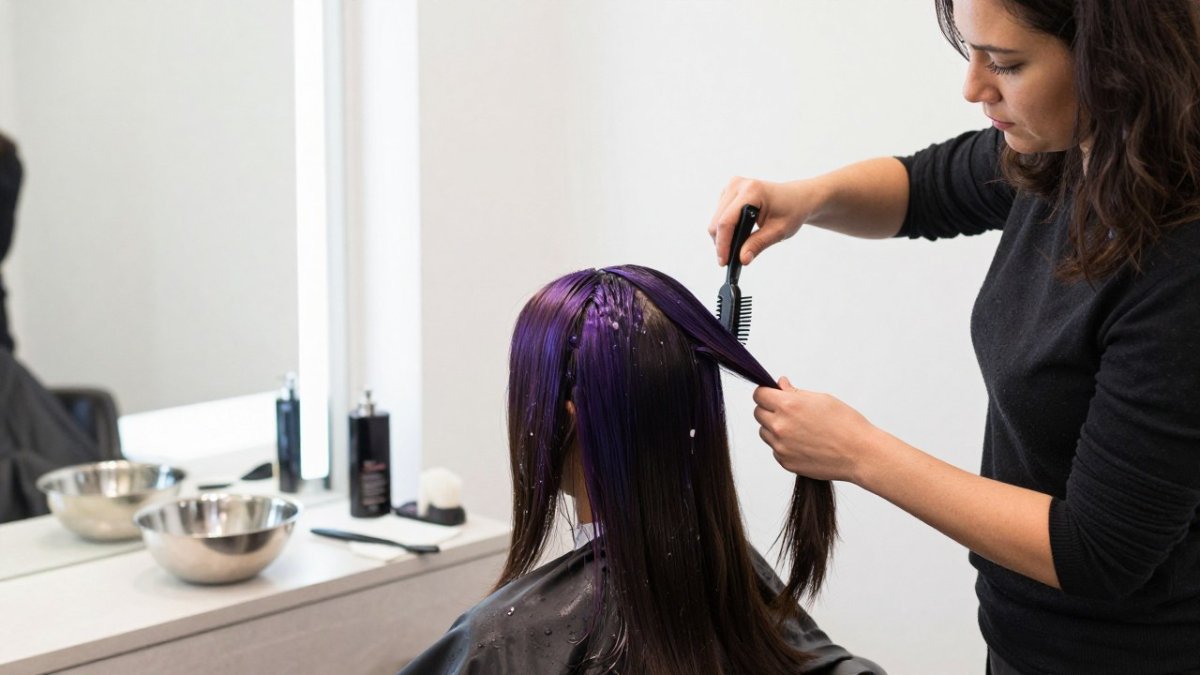
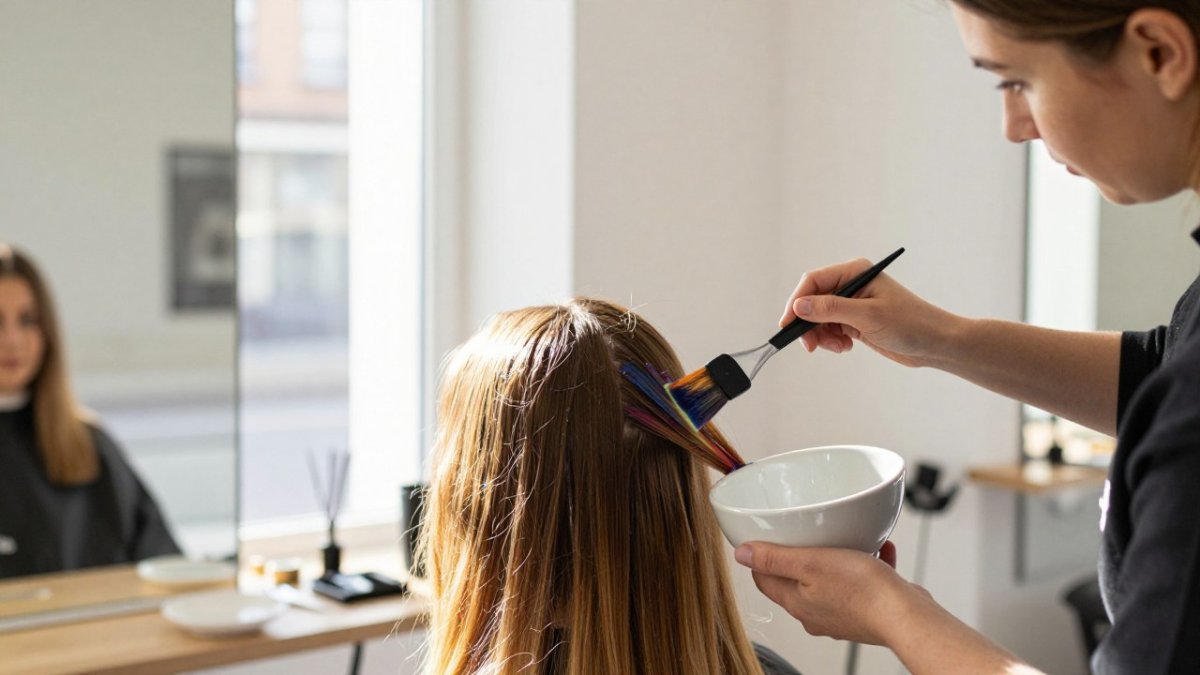
Section the hair and apply from mid-lengths to ends first.
Leave the colour on for the full processing time.
Rinse with cool water and use a colour-safe shampoo.
A common mistake is picking a shade two shades lighter than the box suggests. On brown hair, that usually reads as brassy, not lighter. If you want real lift, see our guide to highlights for dark brown hair for methods that work without a full bleach process.
How to Go Lighter Without Bleach
To go lighter without bleach, you have three realistic routes: high-lift dye, a colour remover, or a gentle lightening service. Each lifts a limited amount, and none matches bleach for maximum lift. The key is understanding what each method actually does to the hair, so you can pick the one that suits your starting shade and hair history.
Here is how the options compare:
Method | Lift available | Best for | Main limit |
High-lift dye | 2-4 levels | Medium brown to dark blonde | Weak on very dark hair |
Colour remover | Removes old colour | Previously coloured hair | No lift on natural pigment |
Gentle lightening | 1-3 levels | Subtle highlights | Slower, needs care |
Temporary colour | None | Visible tone on light hair | Washes out fast |
High-lift dye is the strongest bleach-free option. It still contains lightening agents, so it is not damage-free. It works best on medium brown hair and struggles on very dark bases. High-lift dye is a chemical process, so its results depend on the starting shade and the product used. A strand test is the best way to see how your hair will respond.
Colour remover does not lighten natural pigment; it removes artificial dye molecules so they can be rinsed away. It will not make natural dark hair lighter. A strand test is essential before applying a new colour afterwards.
Gentle lightening is a slower process than bleach and works best for subtle highlights. On very dark hair, the lift is limited, and the result may be a warm brown rather than a true blonde.
Temporary colour adds tone but no lift. On light hair, it can make a visible difference; on dark hair, it will only show if the shade is bold. It is the lowest-commitment option and washes out in a few shampoos.
If you want to understand where your hair sits on the level scale before choosing a method, read our guide to hair colour levels. And if you are weighing up whether to attempt lift at home or book a salon service, our guide to highlights for dark brown hair explains the methods that work without a full bleach process.
Semi-Permanent Hair Dye on Dark Hair
Semi-permanent hair dye on dark hair adds tone and shine without lifting your natural colour. It coats the outside of the hair shaft and fades over several washes, so there is no root regrowth line to manage.
This makes semi-permanent dye a good first step if you are unsure about commitment. If your hair is damaged or brittle, our guide to low-tox hair colour for damaged hair covers gentler options in more detail.
Watch out: semi-permanent colour will not show on very dark hair unless the shade is bold, such as a rich red or copper. Subtle shades simply will not register.
Permanent vs Semi-Permanent Colour: Which to Choose
Choose permanent colour if you need grey coverage or a lasting shift in tone. Choose semi-permanent if you want a low-commitment change or your hair is fragile.
Permanent colour opens the cuticle and deposits pigment inside the hair. It lasts until it grows out. Semi-permanent sits on the surface and fades in six to twelve washes.
If your hair is brittle, start with a gentler formula before committing to permanent colour. Our guide to the best hair dye for brittle hair explains which formulas suit fragile hair best.
Strand Tests, Patch Tests and Safe Application
Always do a patch test 48 hours before colouring, even with a product you have used before. Allergies can develop over time, and a patch test is the only reliable way to check for a reaction. The test involves applying a small amount of mixed colour behind the ear or on the inner elbow, leaving it for the time stated in the instructions, and checking for redness, itching or swelling. A patch test checks for an allergic reaction to the dye ingredients. It does not tell you how the colour will look.
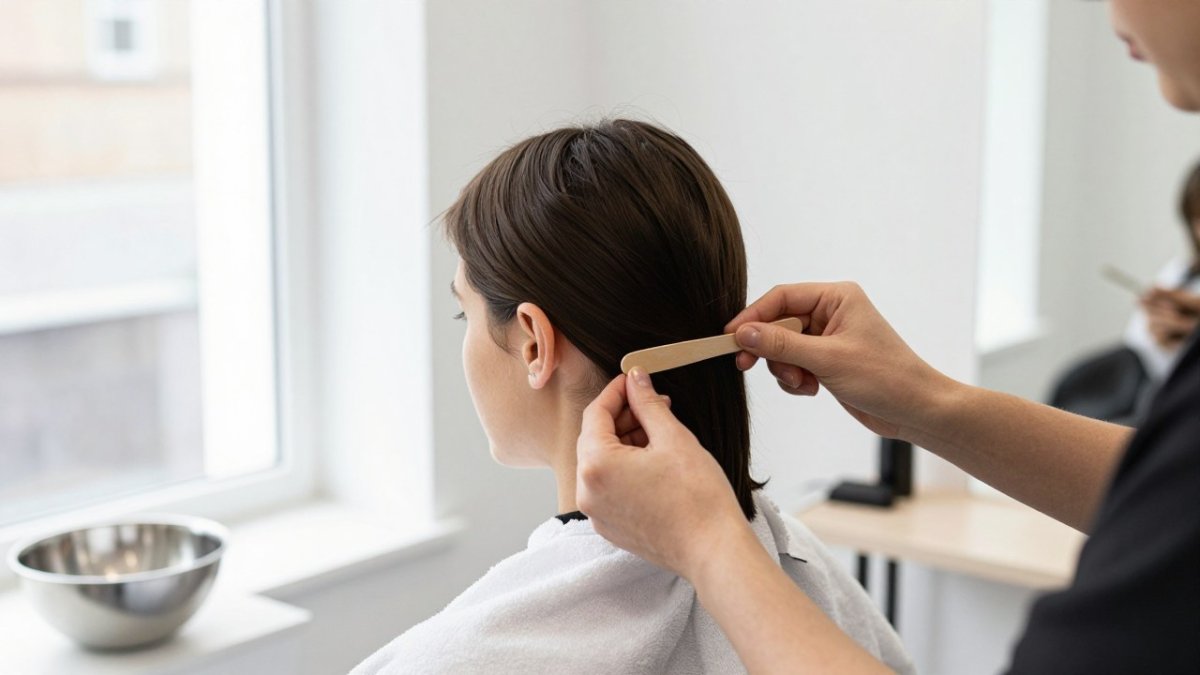
Then do a strand test on a hidden section. This shows you the real colour result before it touches your whole head. Take a small section from the nape or underlayer, apply the colour as instructed, and check the result in daylight, not bathroom lighting. A strand test also shows you how your hair responds to the lifting or depositing process, whether it goes brassy, patchy or too dark, so you can adjust the processing time or choose a different shade.

Application tips that matter:
Read the processing time and stick to it, leaving colour on longer does not give more lift, it gives more damage
Wear gloves to protect your skin
Keep colour away from your eyes
Rinse thoroughly with cool water
Stop at once if you feel burning or itching
Watch out: if you have had a reaction to hair dye before, speak to a pharmacist or GP before colouring again.
Hard water can dull colour faster, so use a colour-safe shampoo and a weekly conditioning treatment. If you have reacted badly to colour before, or you want a strand and patch test done properly, you can book professional hair colour in Fulham.
Colour without bleach is achievable, but it rewards realistic expectations. If you want a shade that suits your hair history and your scalp, our Wella Master Colour Experts at ARQ Hair will build a formula around you, with gentle options for ammonia sensitivity and a patch test before every first appointment. We have been a family-run salon since 1992, and we colour hair in a sustainable setting in London. Get started with ARQ Hair and find a shade that works with your hair, not against it.
Frequently Asked Questions
Can you colour dark hair without bleach?
Yes, but the result is limited by how much lift the colour can achieve. On dark hair, ammonia-free permanent colour or high-lift dye can add warmth, richness or grey coverage, while semi-permanent and temporary colours deposit tone without lightening. If you want to go several shades lighter, a professional assessment is the safest route, because bleach-free methods cannot lift dark hair as far as bleach can.
Will semi-permanent dye show on unbleached hair?
Semi-permanent dye shows best on hair that is already light or has some porosity from previous colouring. On virgin dark hair, expect a subtle tint in strong light rather than a dramatic change. Choosing a shade one or two levels brighter than your natural colour, and leaving it on for the full processing time, gives the most visible result without bleach.
How long does hair dye last without bleach?
Temporary colours typically wash out in one to eight shampoos, semi-permanent dyes usually fade over six to twelve washes, and permanent colour grows out rather than washing away. Fade speeds up with frequent washing, hot water and heat styling. A colour-safe shampoo and a weekly conditioning treatment help hold tone, especially on porous or previously coloured hair.
Can you use high-lift hair colour instead of bleach?
High-lift tints can lighten natural hair, but results depend on the starting shade and the product used. They work best on mid-brown hair and struggle on very dark hair. High-lift colour is still a chemical process, so a strand test and patch test are essential before applying it at home.
Comments